We’ve designed a new building block for quantum computers. The work is published in Nature, but what does it mean and why is it making headlines?
Most quantum hardware starts with a material nature gives you, and researchers then try to work around its limitations. We took a different approach. We asked: what would an ideal qubit need to do? Then we used chemistry to design a molecule with those properties.
What makes an ideal qubit?
Qubits are the basic units that store and process information in a quantum computer. To tackle real problems, such as simulating molecules for new medicines, quantum computers will need hundreds of thousands of qubits or more. But simply placing more and more qubits side by side on the same chip won’t work. Qubits are extremely sensitive, and packing more and more of them together makes them harder to control and more likely to disturb one another. There’s a growing consensus that the best way to scale up to this level is to build many smaller quantum units and connect them together using light.
This requires a qubit-photon interface: a way to transfer a qubit’s quantum information onto a particle of light, a photon. In our molecule, a property called spin holds the quantum information, while light provides the connection to other qubits. This is what we mean by a ‘spin-photon interface’. To be useful for scalable quantum computing, the molecule has to do both jobs well: keep the quantum information stable long enough to use it, and emit light in a fast, precise and reliable way so different qubits can be connected.
So far, achieving that combination has been difficult. Until now. Our approach is different because chemistry lets us design the molecule around the properties we need, rather than simply working with what nature provides.
What our team designed
To do both jobs, we designed three parts:
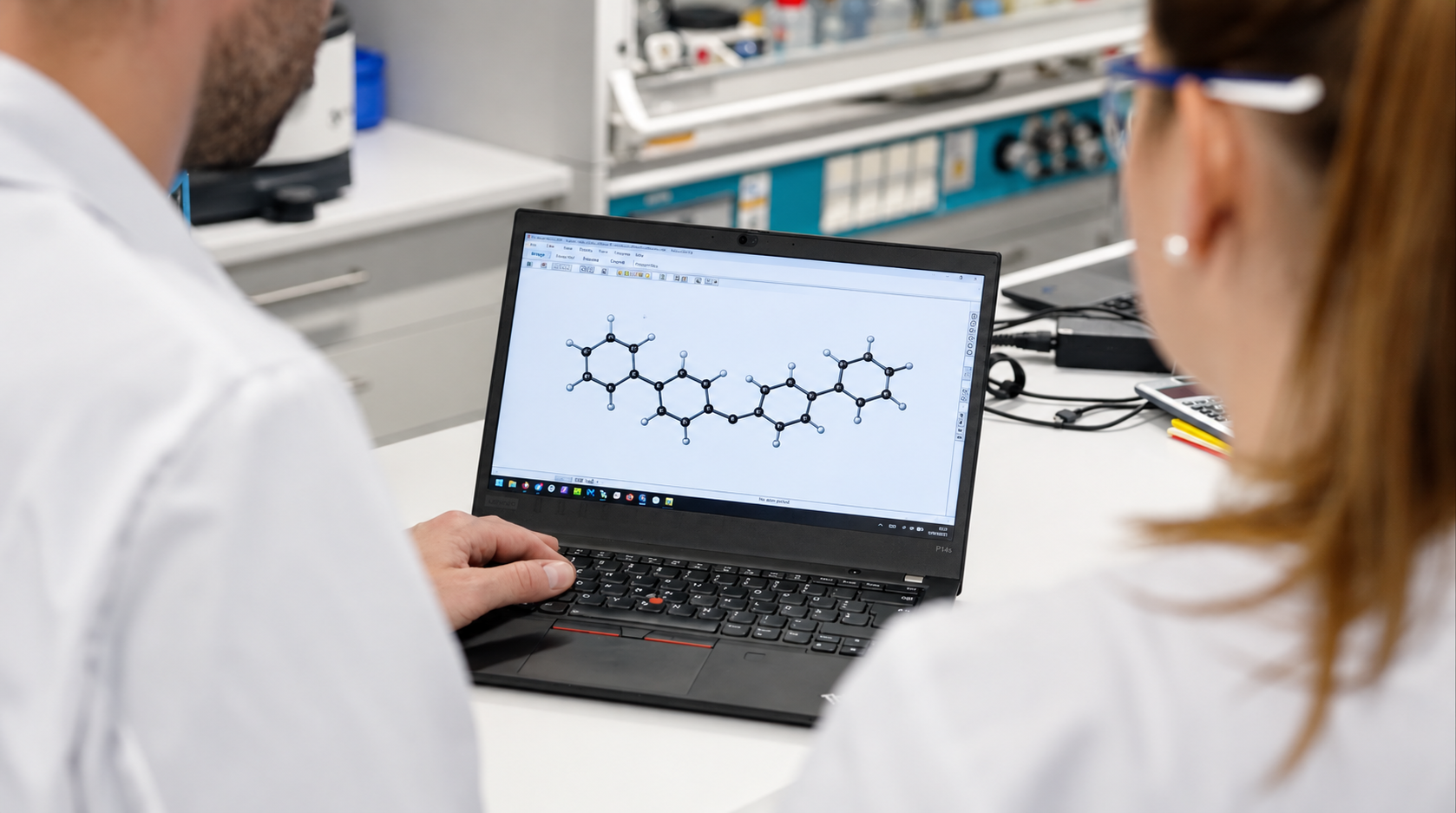
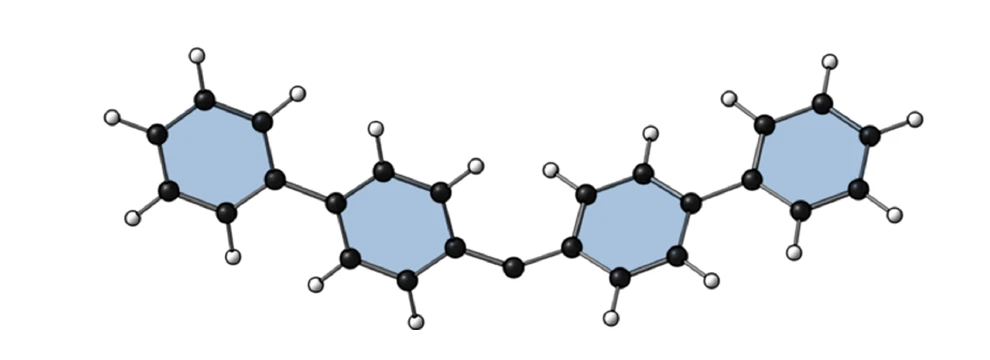
1. The molecule. Our qubit is a carbene: a small molecule made only of carbon and hydrogen. At its centre is a carbon atom with two unpaired electrons and this is where the quantum information is held. The molecule was modelled on a computer before it was made, predicting a sharp spectral line, a different light frequency for each spin state, and a built-in reset when a laser shines on it. Getting there took about four years, with roughly 200 candidates modelled and more than 40 synthesized.
2. The host crystal. The molecule needs a stable environment to work well. So the team designed a crystal around it, using a near-identical molecule as the host. This helps keep the qubit stable and preserves the optical properties needed to work with light.
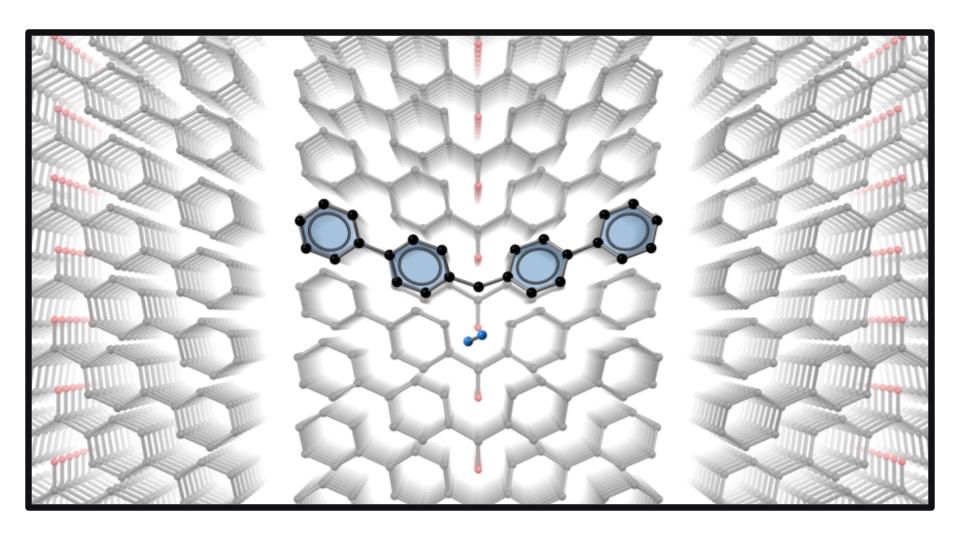
3. Activation by laser. The molecule is first made in a stable, inactive form. A focused laser then turns it into an active qubit exactly where needed, allowing the team to create qubits in precise locations.
The measurements showed that the design worked: the team could control and read out a single molecular qubit, connect it to light, and preserve its quantum state long enough to perform many operations. Together, these results demonstrate the combination of properties needed for a molecular spin-photon interface.
Want the numbers? Check out our deep dive.
Where this fits at NVision and what comes next
Designing the quantum properties of molecules has long been at the heart of NVision’s work. In POLARIS, our quantum-enhanced MRI platform, we manipulate the quantum state of imaging molecules to boost their MRI signal by more than 10,000 times. That makes it possible to see metabolism in real time on standard MRI scanners. Our qubit grows from the same foundation: using chemistry to design the quantum system we need.
Because the qubit is part of the designed molecule, its properties can be improved with chemistry. Several next steps are already underway, with new results to share in the coming months:
- Built-in memory: improving how long the qubit can store quantum information
- Tunable properties: showing how chemistry can be used to optimize the qubit’s properties
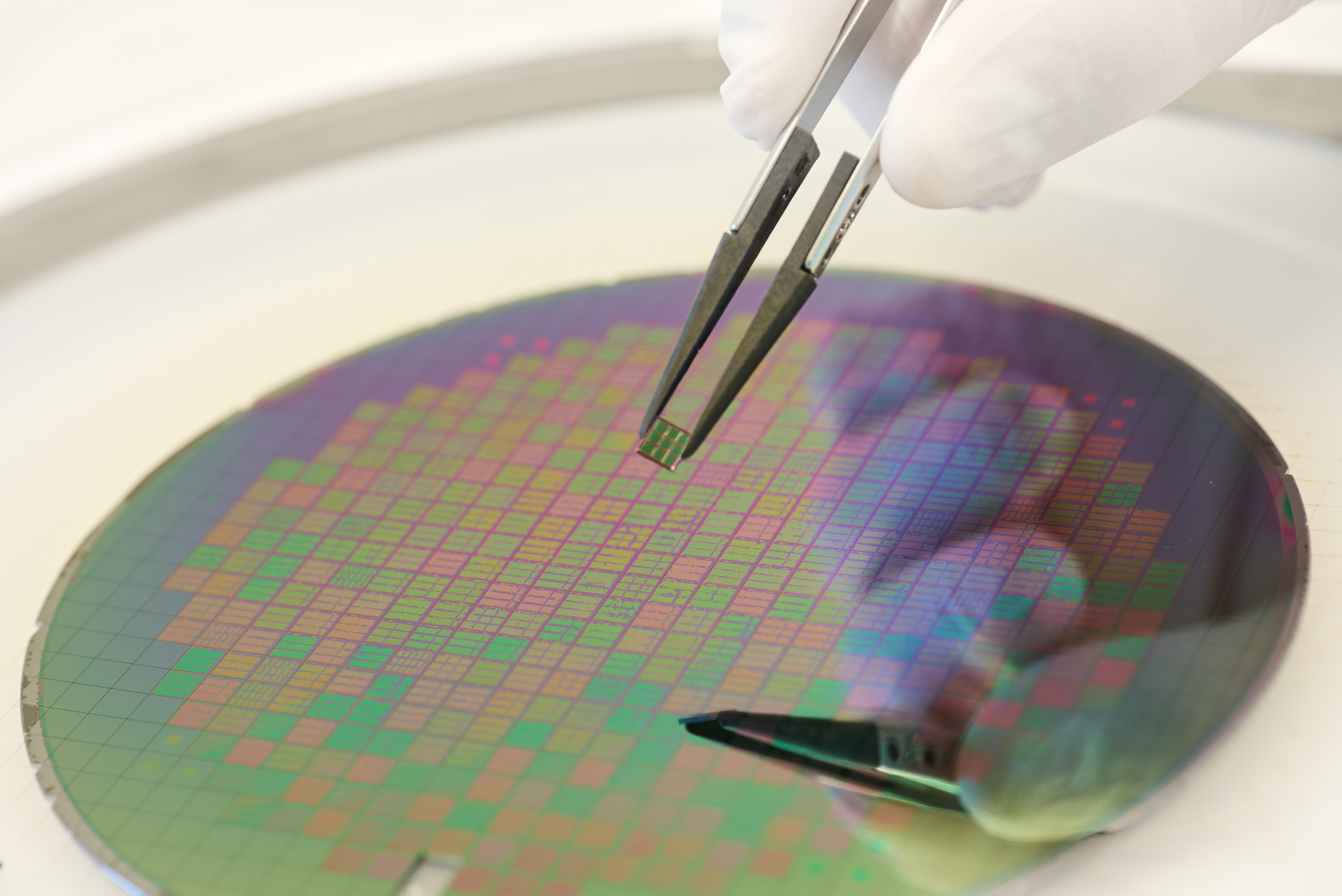
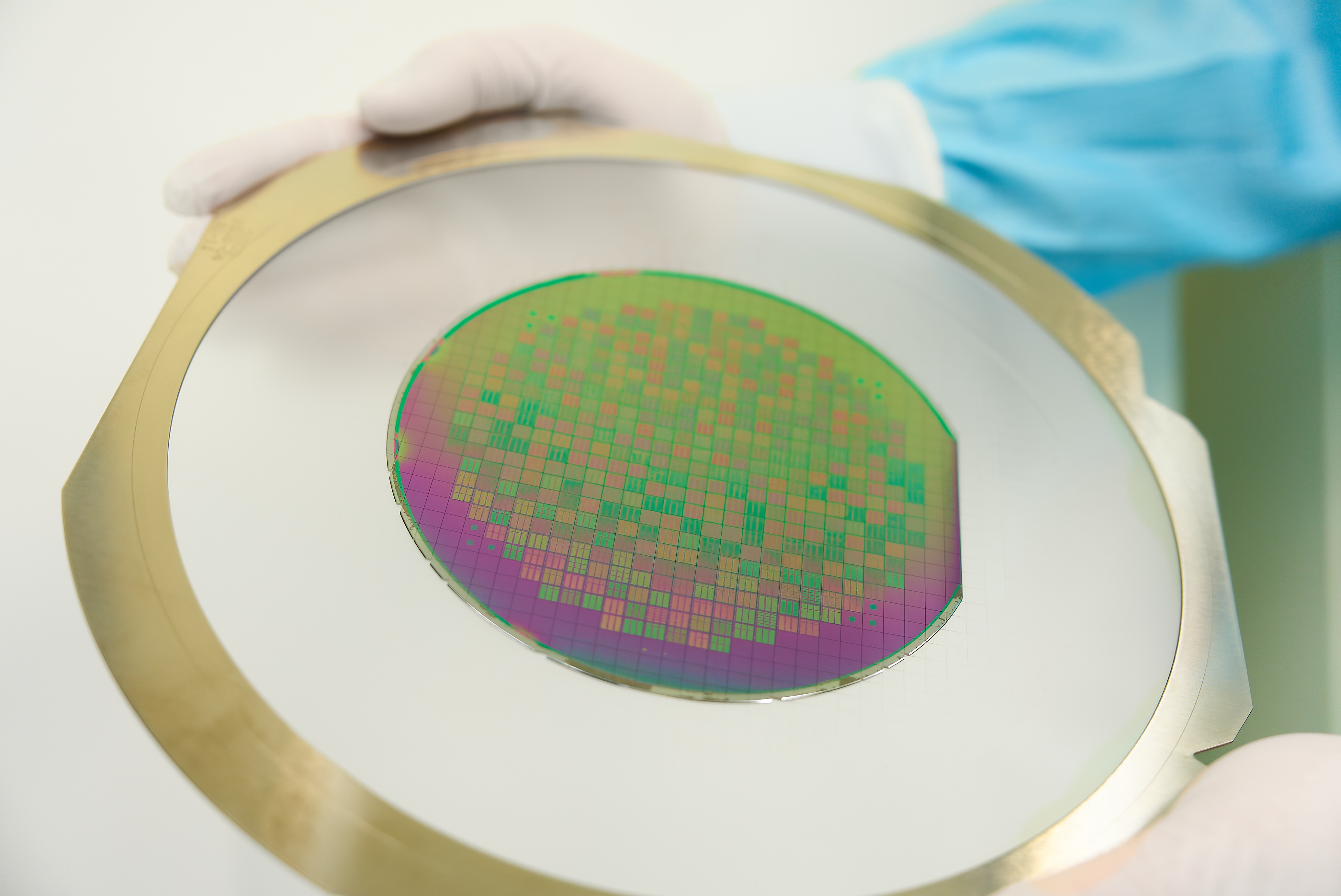
- Ready for chips: integrating molecular qubits as thin films on photonic chips
A few years ago, the open question was whether a molecule with this combination of properties was possible at all. With this work, we’ve shown that it is.
The question now is how to engineer it into a scalable system.
That is the bigger opportunity. Quantum computers will ultimately need huge numbers of identical, high-performing qubits. Chemistry gives us a way to design those qubits around the properties we need, rather than searching for a physical system that happens to come close. That’s why this work is getting attention: it points to a scalable way of building quantum computers.
— —- —- —-
Read the paper → Roggors, S. et al. A Single-Molecule Spin-Photon Interface.