
.jpg)



Stay up to date
News and Updates
Read our latest NVision announcements on Quantum Computing and Quantum-Enhanced MRI.
For press inquiries, contact us at
press@nvision-quantum.com
.jpg)
October 9, 2026
NVision at Quantum Effects 2026: Exploring the Path to Fault-Tolerant Quantum Computing
Earlier this week we took part in Quantum Effects 2026, the international trade fair and conference for application-oriented quantum technologies. The event brought together companies, researchers and start-ups from across the quantum ecosystem, here in our home state of Baden-Württemberg.
Our CEO Sella Brosh joined Philippe Muller of Alice & Bob and Thomas Strohm of Bosch for a panel discussion on the path to fault-tolerant quantum computing. Our view is that the secret lies in the qubit: the future of quantum computing depends on getting the building blocks right. Qubit quality and scalability have to go hand in hand, or the hardware itself becomes the limiting factor.
Having been part of the quantum technology scene in Baden-Württemberg for many years, we find that Quantum Effects feels a little like a reunion: a chance to reconnect with partners, friends and former colleagues, and to explore new ideas!
Thanks to the Quantum Effects team for bringing the community together and to everyone who joined the conversations at our booth. We’re already looking forward to 2028.
Read more
PIQC
October 7, 2026
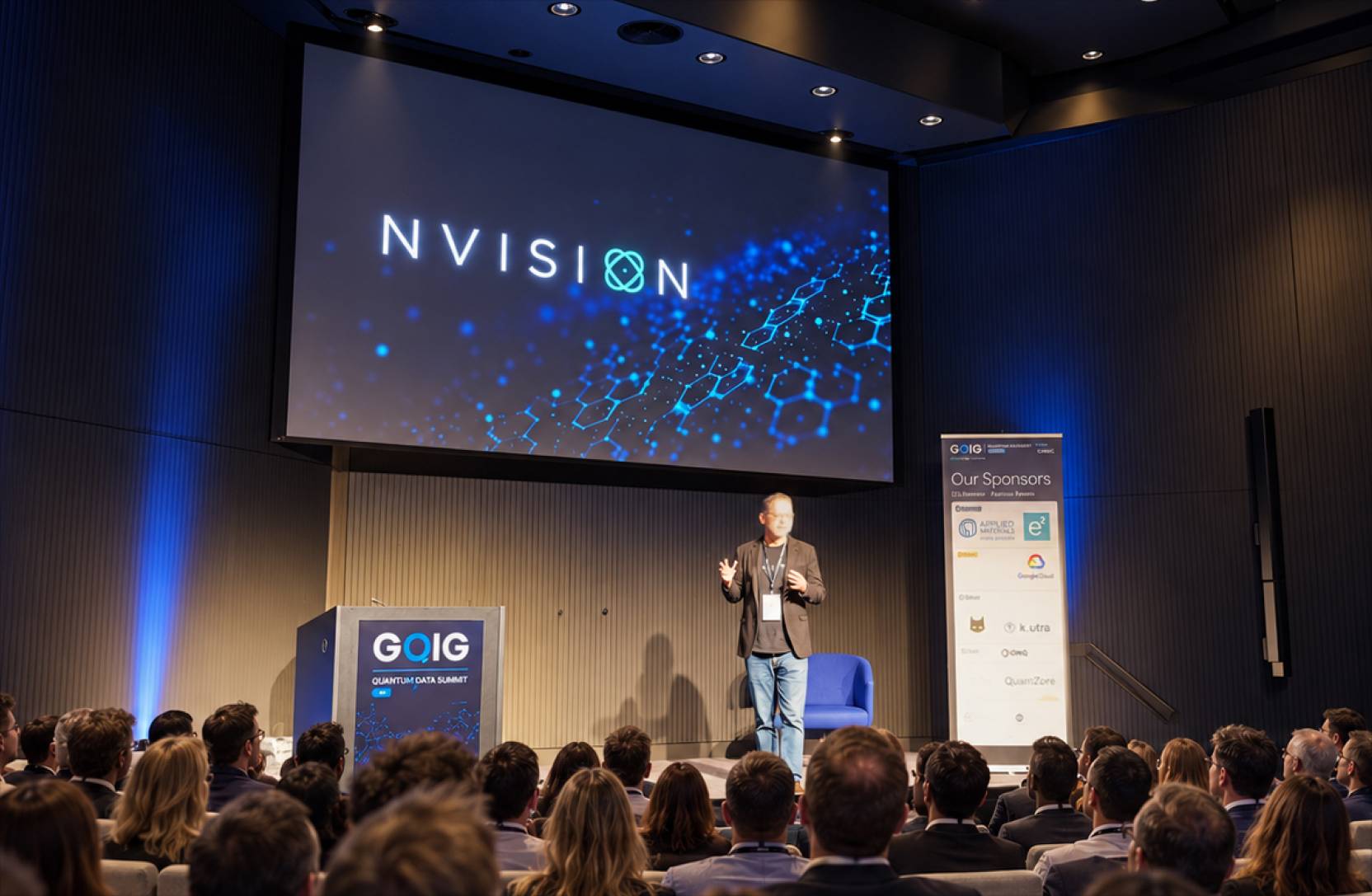
NVision at GQIG Quantum Infra Summit EU 2026: Scaling Quantum Computing with Semiconductor Technology
Last week we took part in the GQIG Quantum Infra Summit EU, hosted at IMEC's headquarters in Leuven. The event brought together industry and research leaders working on quantum computing, sensing and secure networks.
Our co-founder Ilai Schwartz gave a talk on what we see as the central challenge in quantum computing today: how to scale high-quality qubits into fault-tolerant systems without hardware complexity becoming the bottleneck.
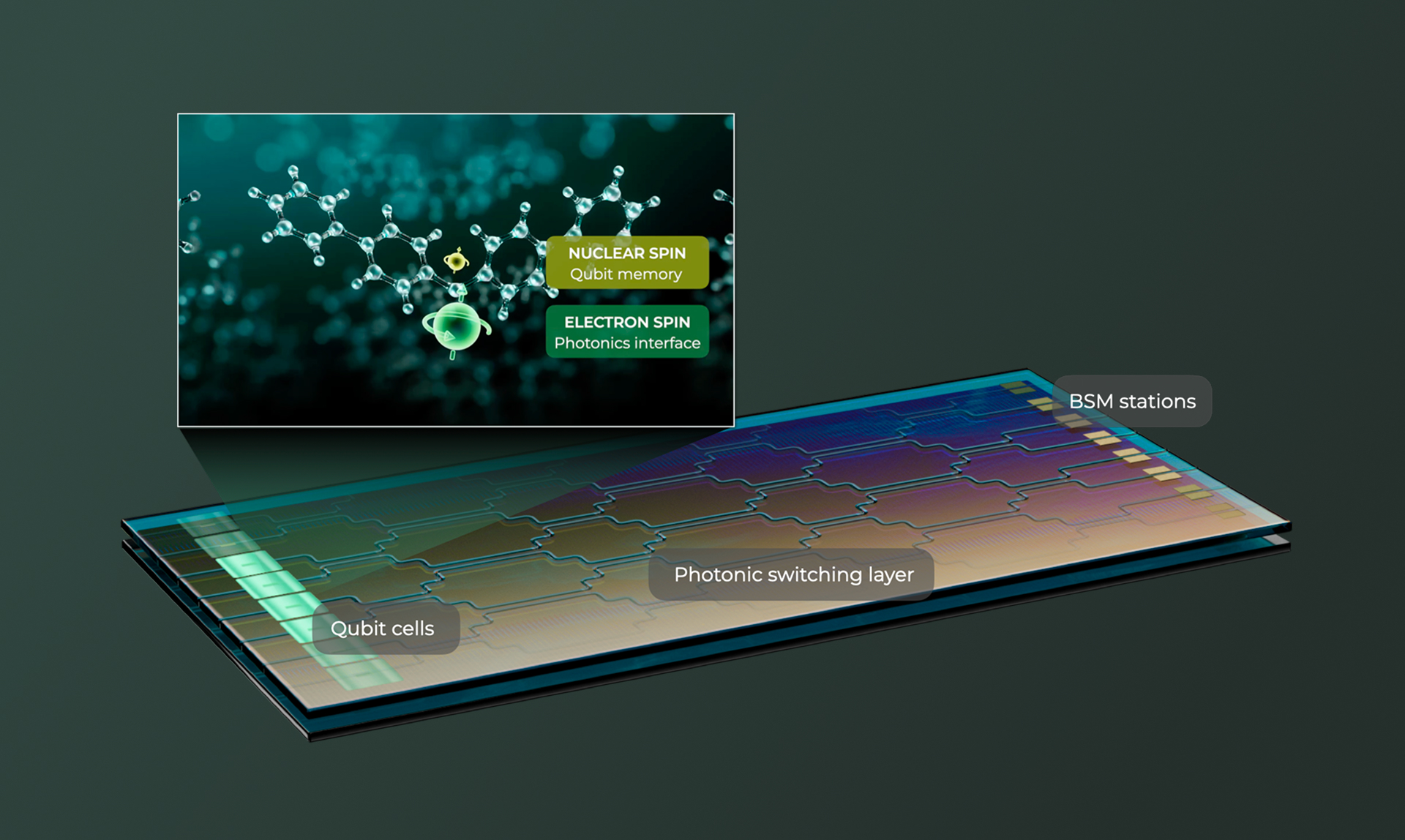
Our view is that for quantum computing to scale, it needs to be compatible with semiconductor technology. That's the thinking behind our PIQC architecture, which combines spin qubits with photonic connectivity by placing molecular qubits directly onto photonic integrated circuits. This opens a path to wafer-scale manufacturing, drawing on the tools and know-how of an industry that already builds highly complex devices at enormous scale.
Thanks to the GQIG and IMEC teams for the invitation, and to everyone who joined the conversations during the event. We're looking forward to continuing these discussions at the intersection of quantum and semiconductor technology.
Read more
PIQC

October 1, 2026
NVision at ASTRO 2026: Exploring New Opportunities for Quantum-Enhanced MRI
We've wrapped up our first American Society for Radiation Oncology (ASTRO) Annual Meeting in Boston. The meeting gave us the opportunity to introduce quantum-enhanced MRI to the wider radiotherapy community and discuss new applications.
We had some really interesting conversations about how radiotherapy is evolving and where metabolic measurements could add value. The discussions also opened up ideas for new applications, from heat activated liposomes for targeted chemotherapy to radiation therapy for ventricular tachycardia.
Thanks to everyone who stopped by our booth and shared their work and ideas with us. We left Boston with lots of fresh ideas and excitement about how quantum-enhanced MRI can contribute to the future of radiotherapy. We're already looking forward to ASTRO 2027.
Read more
POLARIS
POLARIS
Blog
Blog
PIQC

August 16, 2026
From Cancer Imaging to Quantum Computing: NVision’s Molecular Qubit Breakthrough
SWR profiled NVision’s path from quantum-enhanced MRI to quantum computing, highlighting how research into molecules for metabolic imaging led to an unexpected discovery: a new type of molecular qubit. The article explores how molecular qubits could enable a stable, scalable approach to quantum computing.
Read more
In the News

August 7, 2026
Quantum Machines Seminar Series: Molecular Qubits with NVision's Ilai Schwartz
Quantum Machines featured NVision CTO Ilai Schwartz in an on-demand seminar on the first individual addressing and coherent control of single molecular spin qubits. The session explores millisecond-scale coherence, optical spin readout, and how molecular qubits could integrate with photonic platforms for scalable quantum computing and networking.
Watch now
Read more
In the News

August 4, 2026
From Sensing to Computing: NVision’s Molecular Qubits
Brian Siegelwax profiled NVision’s expansion from quantum sensing into quantum computing, exploring how molecules originally studied for sensing could serve as long-lived, optically connected qubits. The article highlights the combination of molecular coherence and photonic integration as a potential path toward scalable quantum computing.
Read the full article on IQT News
Read more
In the News
POLARIS
Blog
June 25, 2026
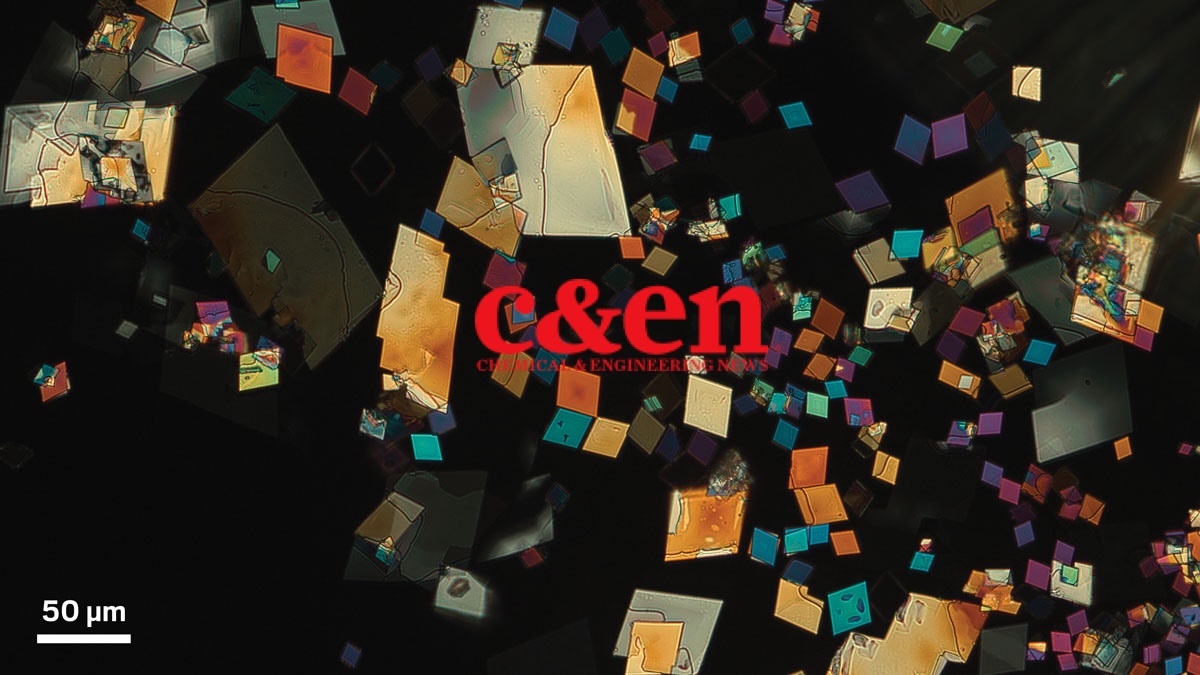
Chemistry in Pictures: Quantum carbenes
Chemical & Engineering News featured NVision’s carbene-based molecular qubits, highlighting how specially designed molecules could offer a new building block for quantum computing. The article explores their long spin coherence, relative ease of fabrication, and broad molecular design space for tuning optical, electronic, and magnetic properties.
Read the full article
Read more
In the News

June 16, 2026
Sella Brosh at Commercialising Quantum: Fixing Europe’s competitiveness in quantum
At Commercialising Quantum Global 2026, NVision CEO Sella Brosh joined The Economist’s Jason Palmer for a fireside chat on Europe’s competitiveness in quantum. The discussion explored how Europe can build on its scientific strengths and invest in critical system layers, from photonic connectivity to manufacturability, to compete as quantum computing scales.
Watch the full fireside chat
Read more
In the News
POLARIS
Company
May 20, 2026
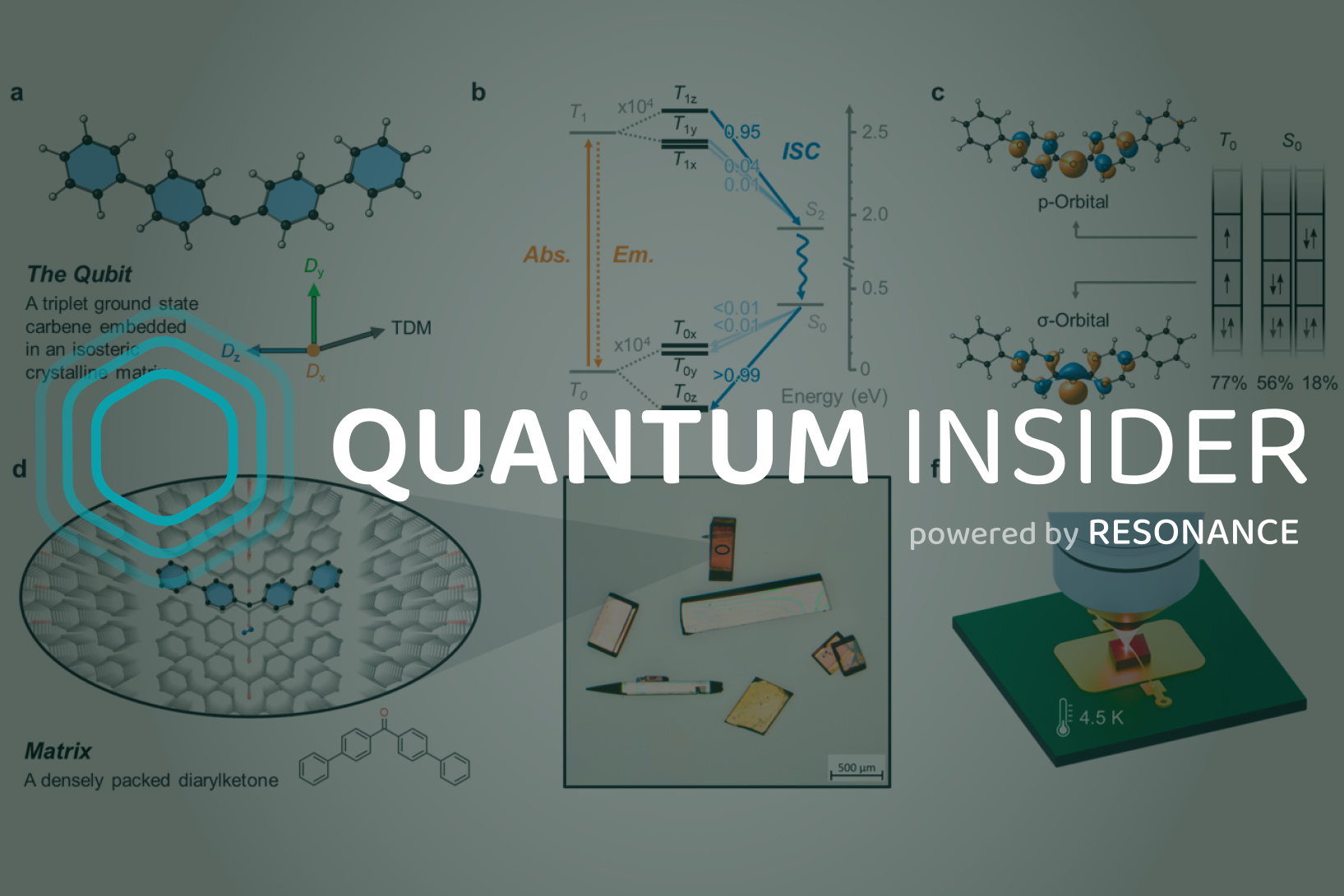
Molecular Qubit Achieves Single-Photon Quantum Control
The Quantum Insider examined NVision’s demonstration of a single-molecule spin-photon interface using an engineered organic carbene molecule. The article highlights the qubit’s stable optical emission, millisecond-scale coherence, and individual initialization, control, and readout using light. It also explores the potential for chemically designed molecular qubits to integrate with photonic chips.
Read the full article on The Quantum Insider
Read more
In the News

May 14, 2026
Molecules emerge as a new kind of building block for quantum computers
Science profiled NVision’s development of molecular spin qubits, highlighting the first optical control of quantum information in a single organic molecule. The article explains how designer molecules could offer long coherence times, bright optical signals, and a scalable path to photonic chip integration.
Read the full article on Science.org
Read more
In the News
May 13, 2026
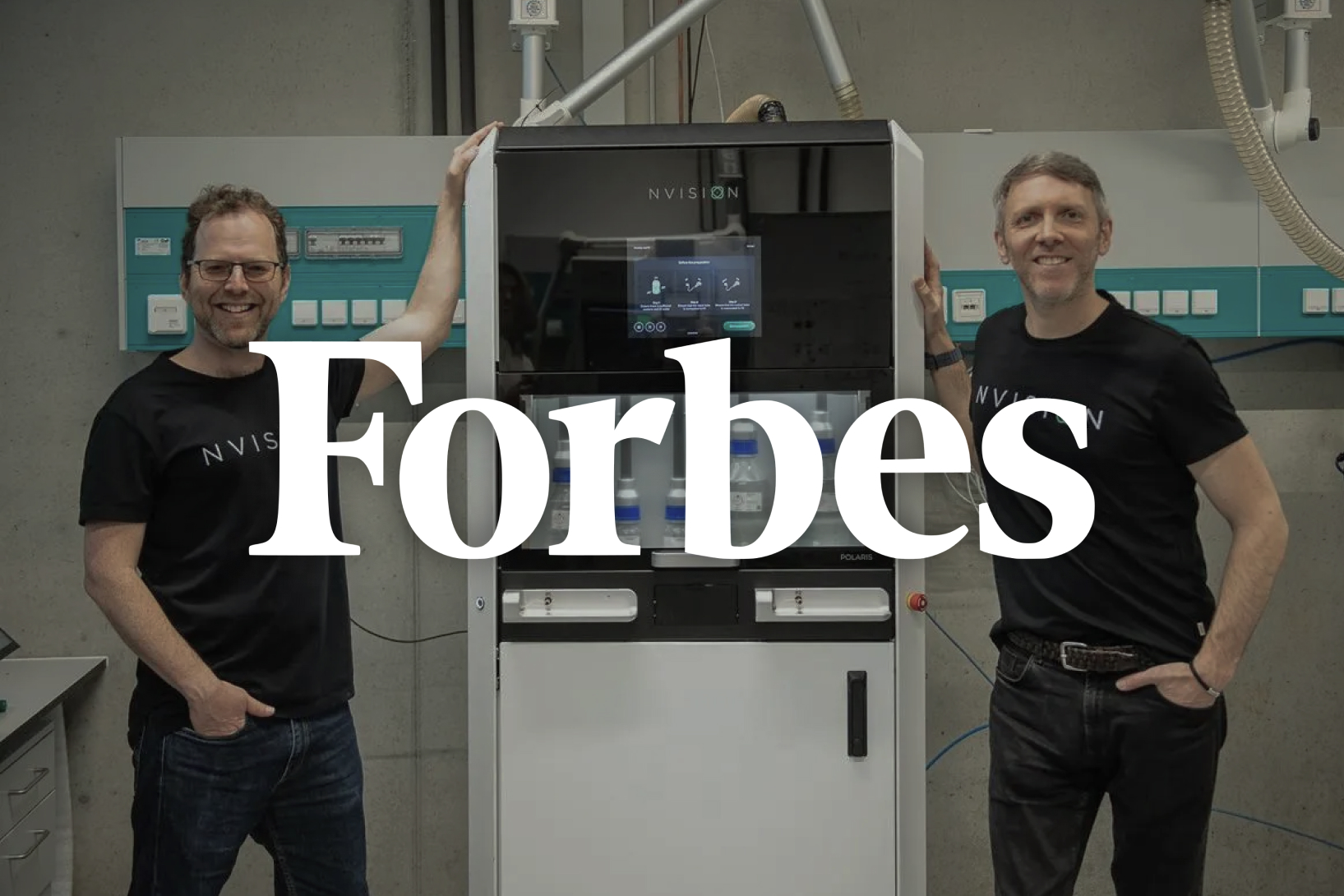
This Startup Tracks How Cancer Reacts To Treatment In Real Time
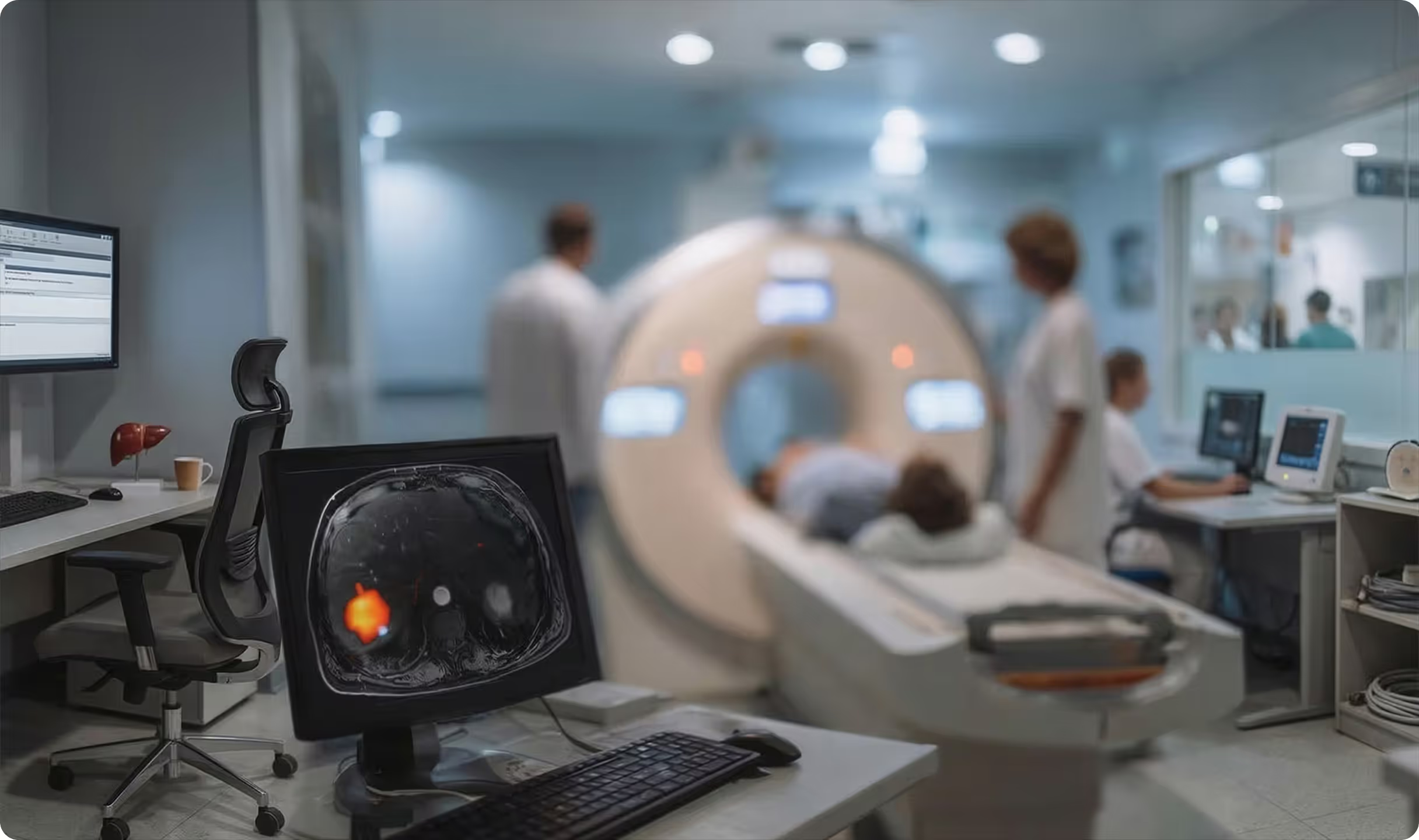
Forbes profiled NVision’s $55 million Series B financing round, led by Abbott, and the company’s efforts to scale its quantum-enhanced metabolic imaging platform. The article highlights how POLARIS boosts MRI signals by more than 10,000 times, enabling researchers to visualize tumor metabolism and assess treatment response within days rather than months. It also outlines NVision’s plans to expand to 20 research centers worldwide and apply its molecular quantum technology to drug discovery and development.
Read the full article on Forbes.com ↗
Read more
In the News
November 12, 2025
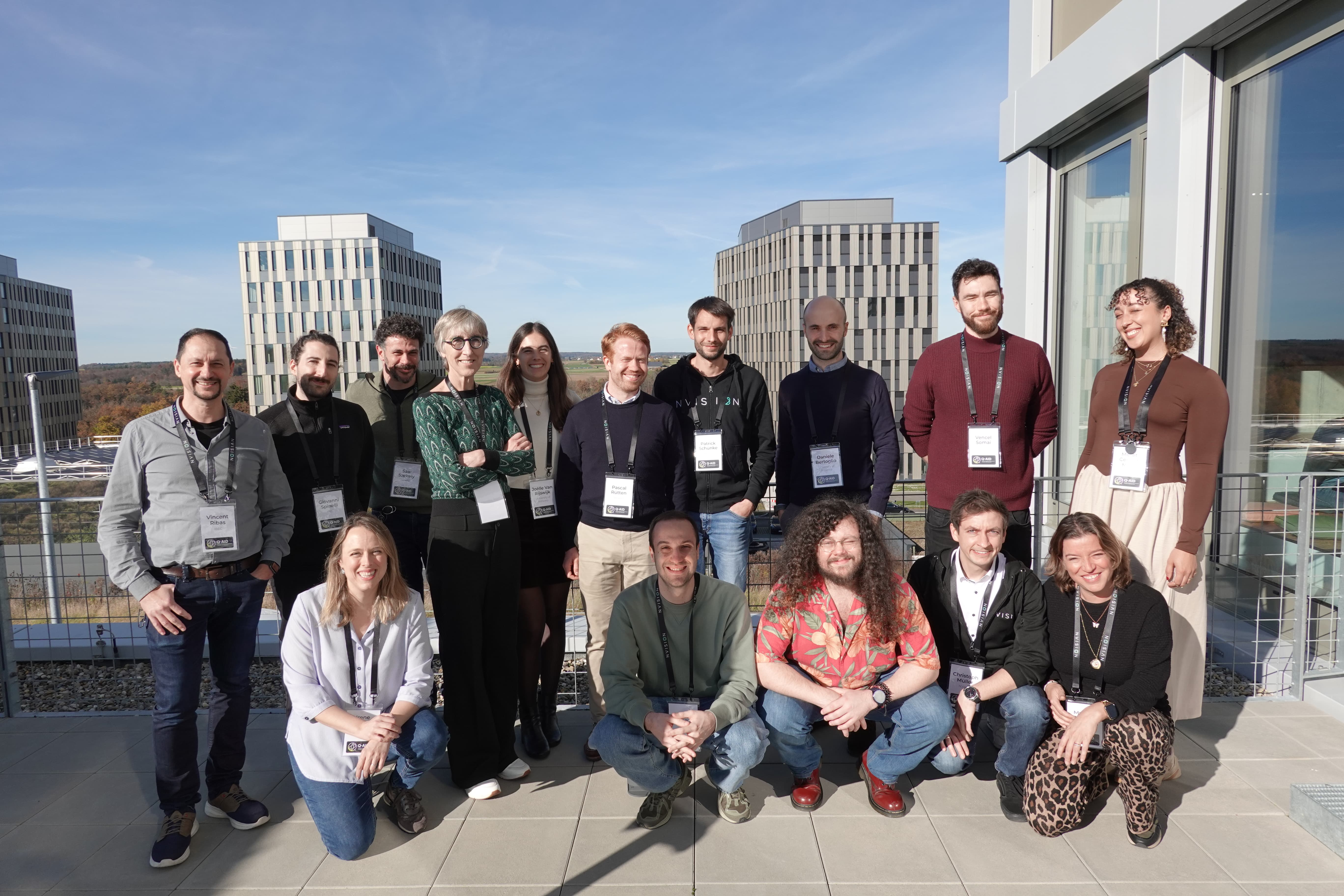
EU Flagship Project Kick-Off: NVision Brings Together Partners to Advance Diagnostics and Treatment Monitoring with AI and HP-MRI
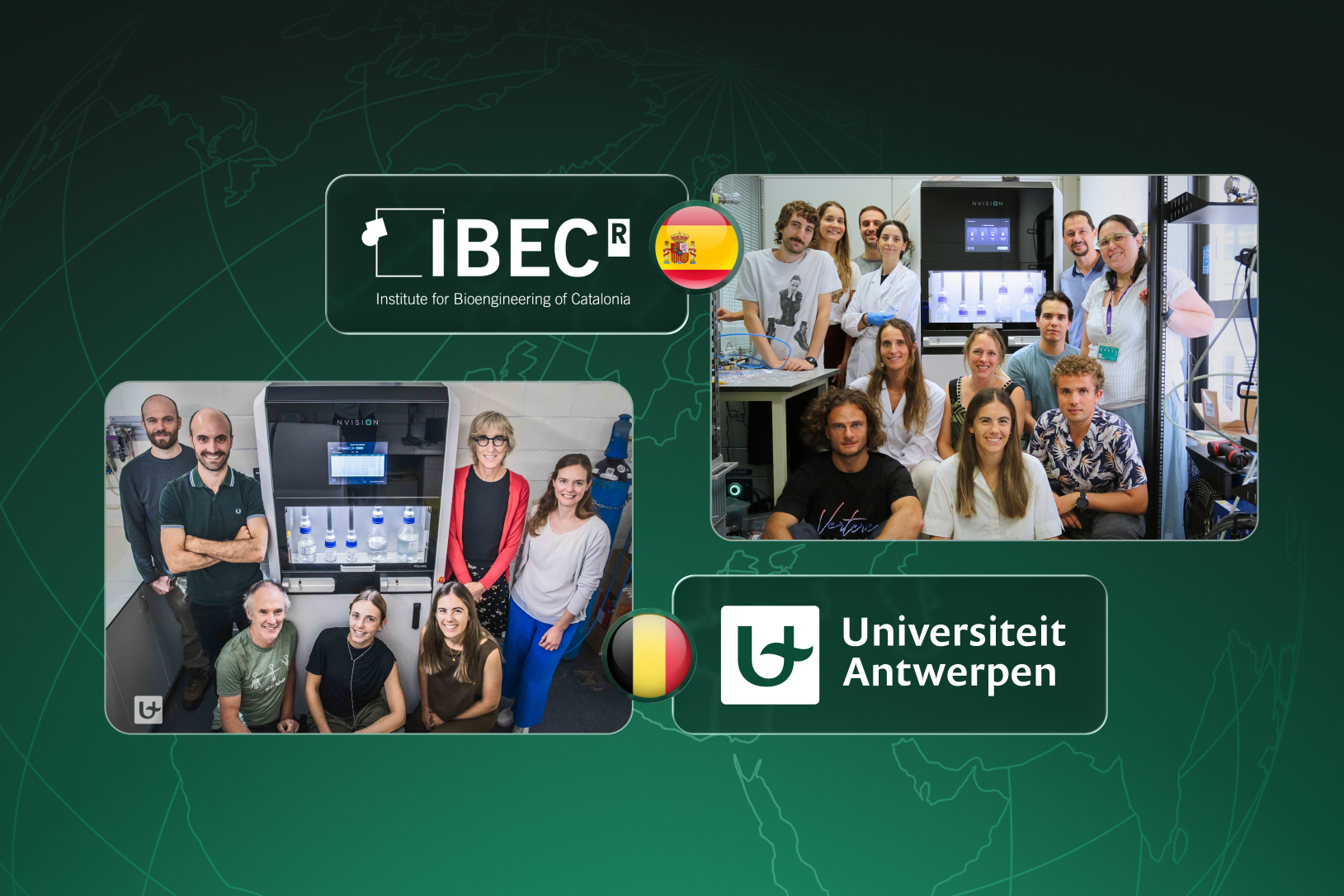
ULM, Germany—We officially kicked-off the Q-AID project with the first in-person meeting between the research partners from IBEC, University of Antwerp and our industry AI teams from Gemelli Biotech, Aarhus University, DPU and CEA.
Q-AID’s mission is to integrate quantum-enhanced hyperpolarized MRI imaging with advanced AI, opening new possibilities for diagnosis and treatment of cancer, Alzheimer’s disease, and multiple sclerosis.
As part of the European Commission’s Quantum Europe Strategy, Q-AID helps to position Europe as a global leader in quantum innovation.
Read more
POLARIS

November 6, 2025
NVision Named Top 10 Finalist for The Spark: German Digital Award
MUNICH, Germany—NVision Imaging Technologies has been recognized as a Top 10 Finalist for The Spark - The German Digital Award (Der Deutsche Digitalpreis). The award committee recognized POLARIS for its new approach to medical diagnostics, applying quantum physics to solve a critical healthcare challenge.
Read more
Company
October 23, 2025
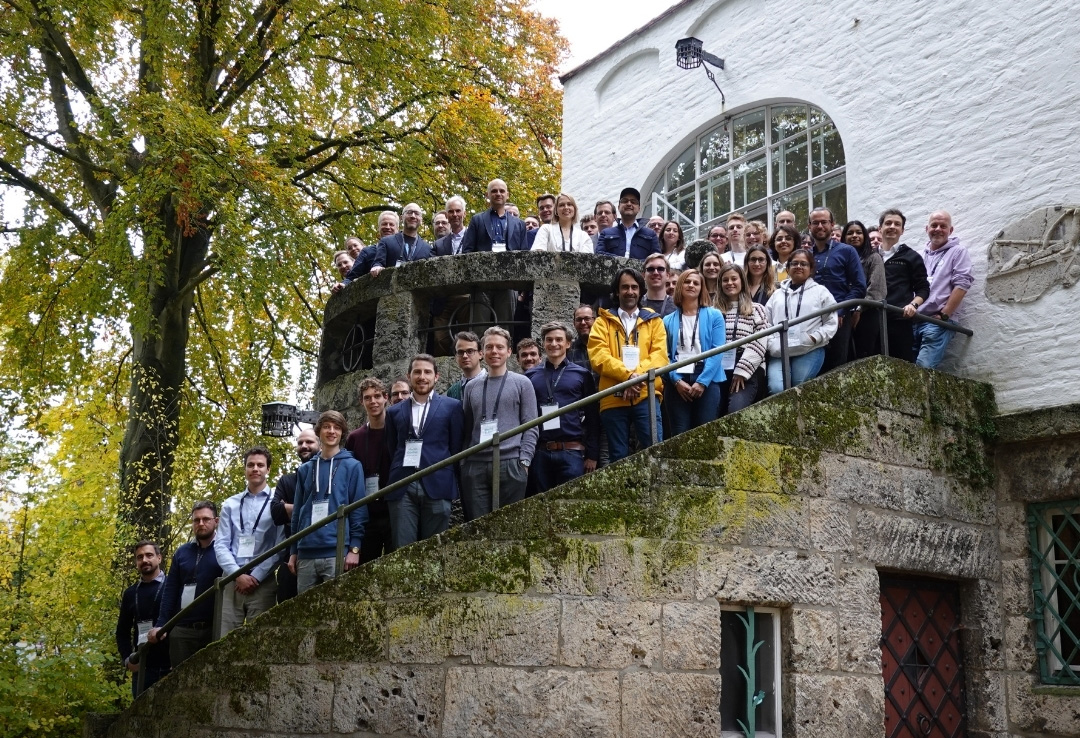
German Flagship Project Annual Meeting: Building an End-to-End Clinical Platform for Quantum-Enhanced Metabolic MRI
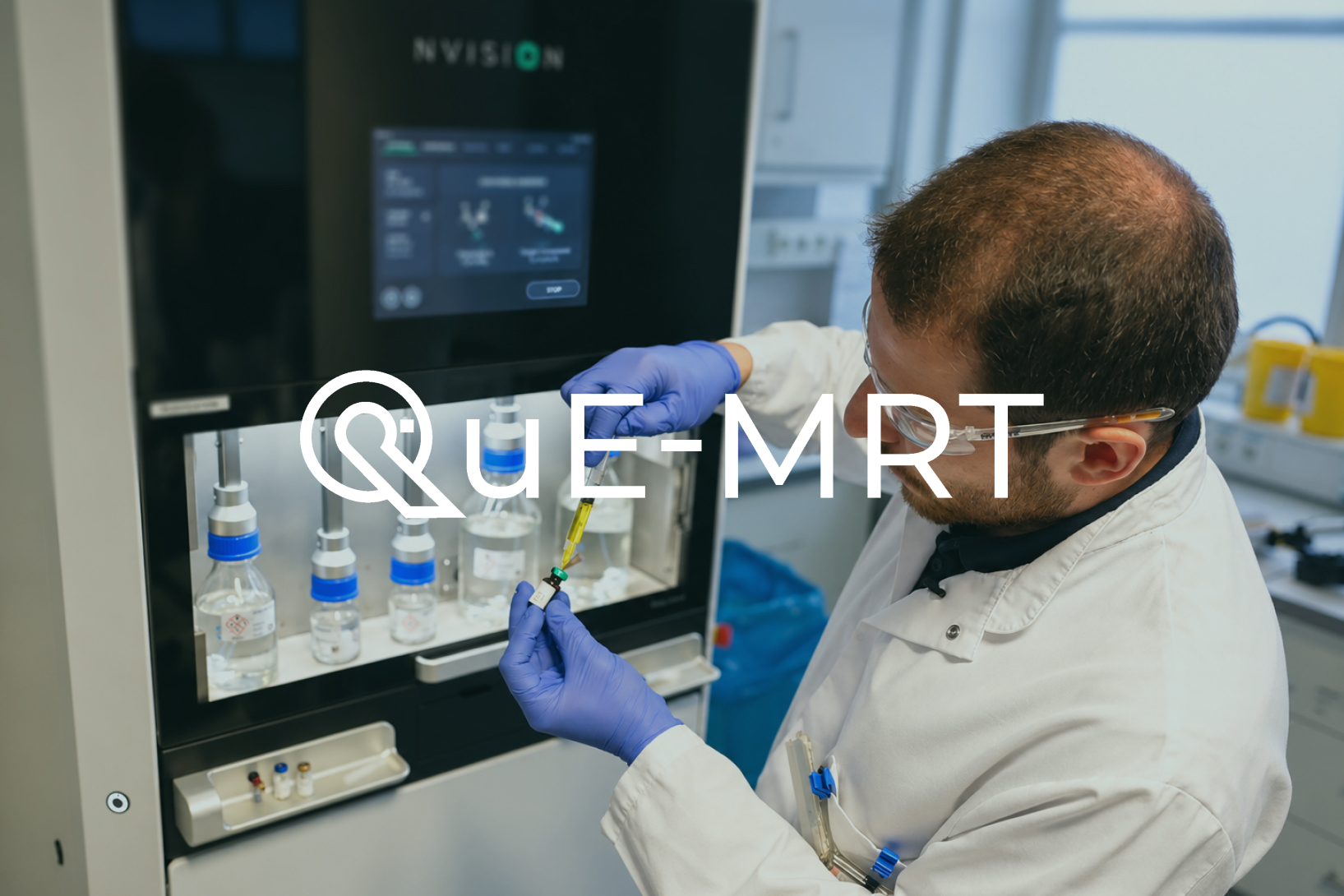
ULM, Germany - We joined the annual General Assembly of QuE-MRT, for a day focused on discussions and updates for advancing metabolic imaging.
This German flagship project is focused on building an end-to-end clinical platform for quantum-enhanced hyperpolarized metabolic MRI, including R&D work on the polarizer and MRI acquisition methods, preclinical research on cancer models, regulatory effort towards clinical studies in Germany and ultimately running clinical studies on 3 different cancer patient populations.
Once again, we were impressed by the progress happening on so many fronts:
- Standardized MRI acquisition protocols enabling broader adoption
- New, promising metabolic probes (like Z-OMPD and α-KIC)
- Key advances in the regulatory process toward the first clinical HP-MRI studies in Germany
Read more
POLARIS

July 2, 2025
NVision Positioned as Key Enabler for Q-MRI Following EU’s Formalization of Quantum Europe Strategy
BRUSSELS, Belgium— The European Commission has formalized its Quantum Europe Strategy, listing Quantum-Enhanced MRI (Q-MRI) as a core priority for global leadership by 2030.
NVision's POLARIS platform provides the necessary room-temperature hyperpolarization technology to enable Q-MRI to be technically feasible and scalable in clinical settings. The alignment of POLARIS with this strategic mandate contributes to providing non-invasive, real-time metabolic insights as a "Made in Europe" quantum solution for global health.
Learn more ↗
Read more
POLARIS
Company

May 1, 2025
Advancing Clinical HP-MRI: UCL and Partners Begin Standardization Project Using POLARIS
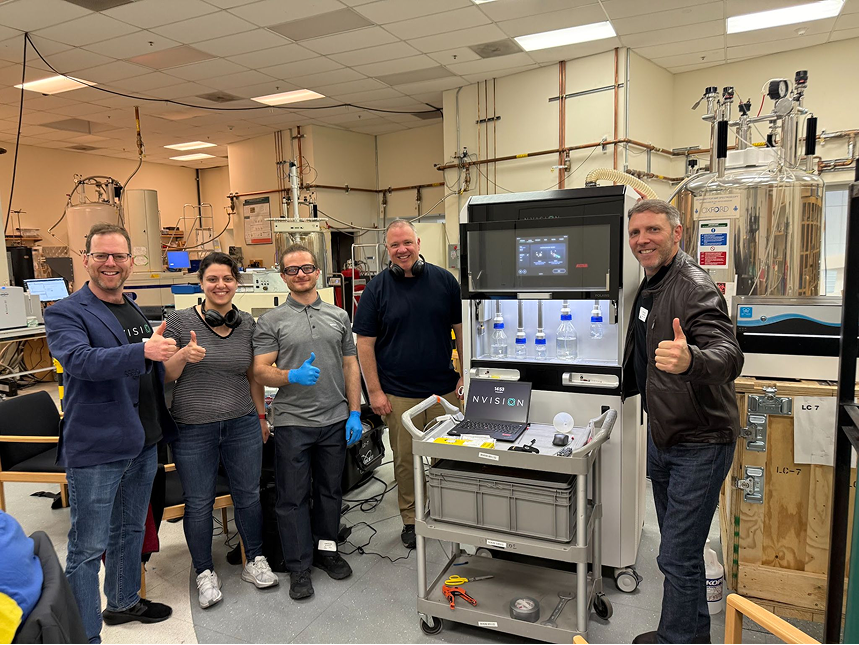
LONDON, UK–POLARIS was temporarily installed at University College London (UCL) as part of CHARM (Calibration of Hyperpolarized metAbolic MR).CHARM is a UK–Germany collaboration involving Professor Shonit Punwani’s group at UCL, Professor Xavier Golay’s team at Gold Standard Phantoms, and NVision. The project aims to make hyperpolarized MRI scalable through standardized calibration methods, phantoms, and reliable polarizer technology.During the three-week deployment, POLARIS supported over 100 hyperpolarization experiments and demonstrated consistent performance.
Read more
POLARIS
April 10, 2025
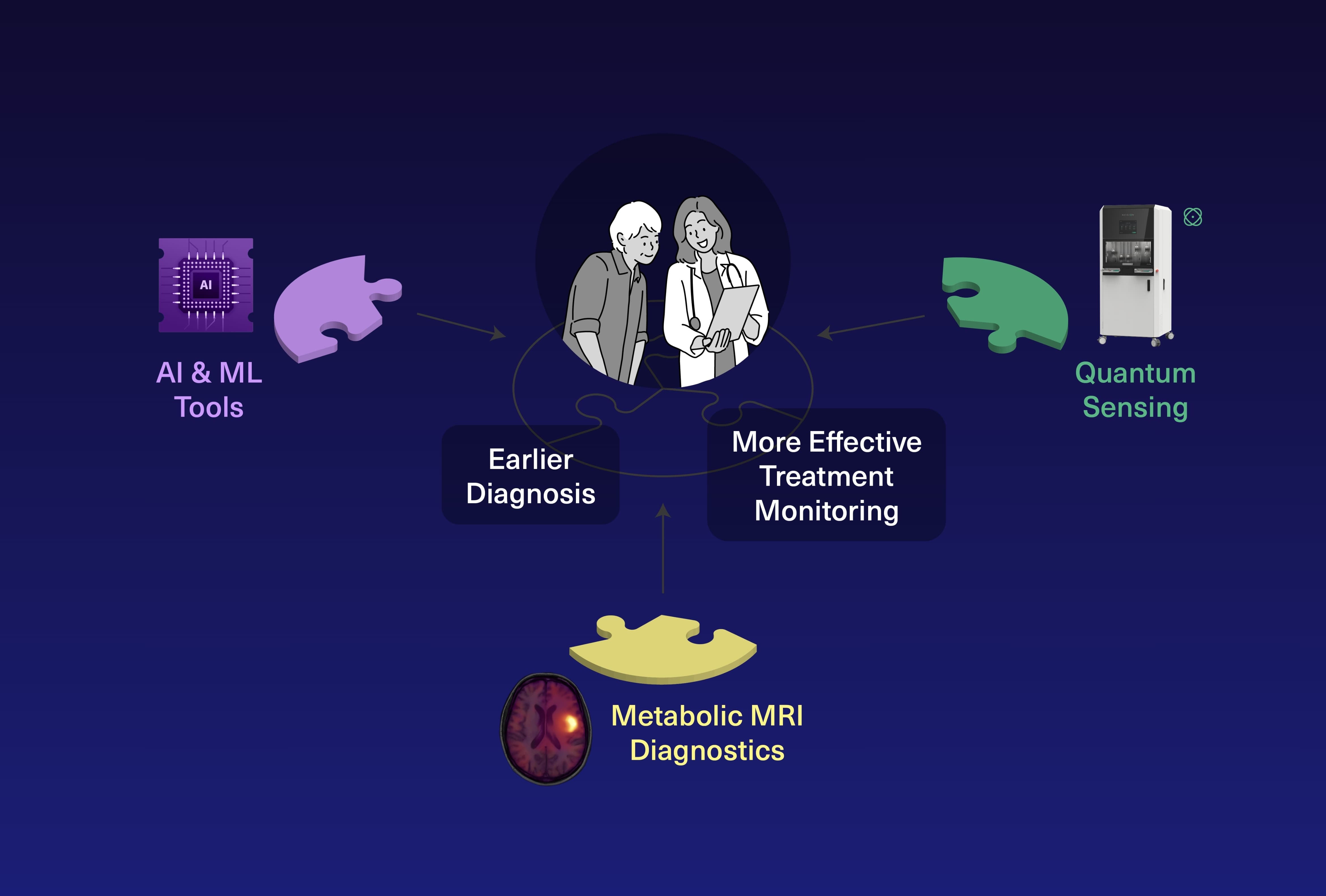
Major EU Q-AID Consortium Launches to Integrate Quantum-Enhanced MRI with AI for Advanced Diagnostics
BRUSSELS, Belgium— NVision announced its key role in the Q-AID consortium, a new EU initiative focused on integrating quantum-enhanced metabolic imaging with advanced AI tools for medical diagnostics.The consortium will use POLARIS technology to address needs in cancer, Alzheimer's disease, and multiple sclerosis by supporting earlier diagnosis and treatment monitoring.This multi-year program, supported by the European Commission, focuses on preclinical validation and small-scale clinical studies (20–70 patients).
Learn more about Q-AID ↗
Read more
POLARIS
February 1, 2025
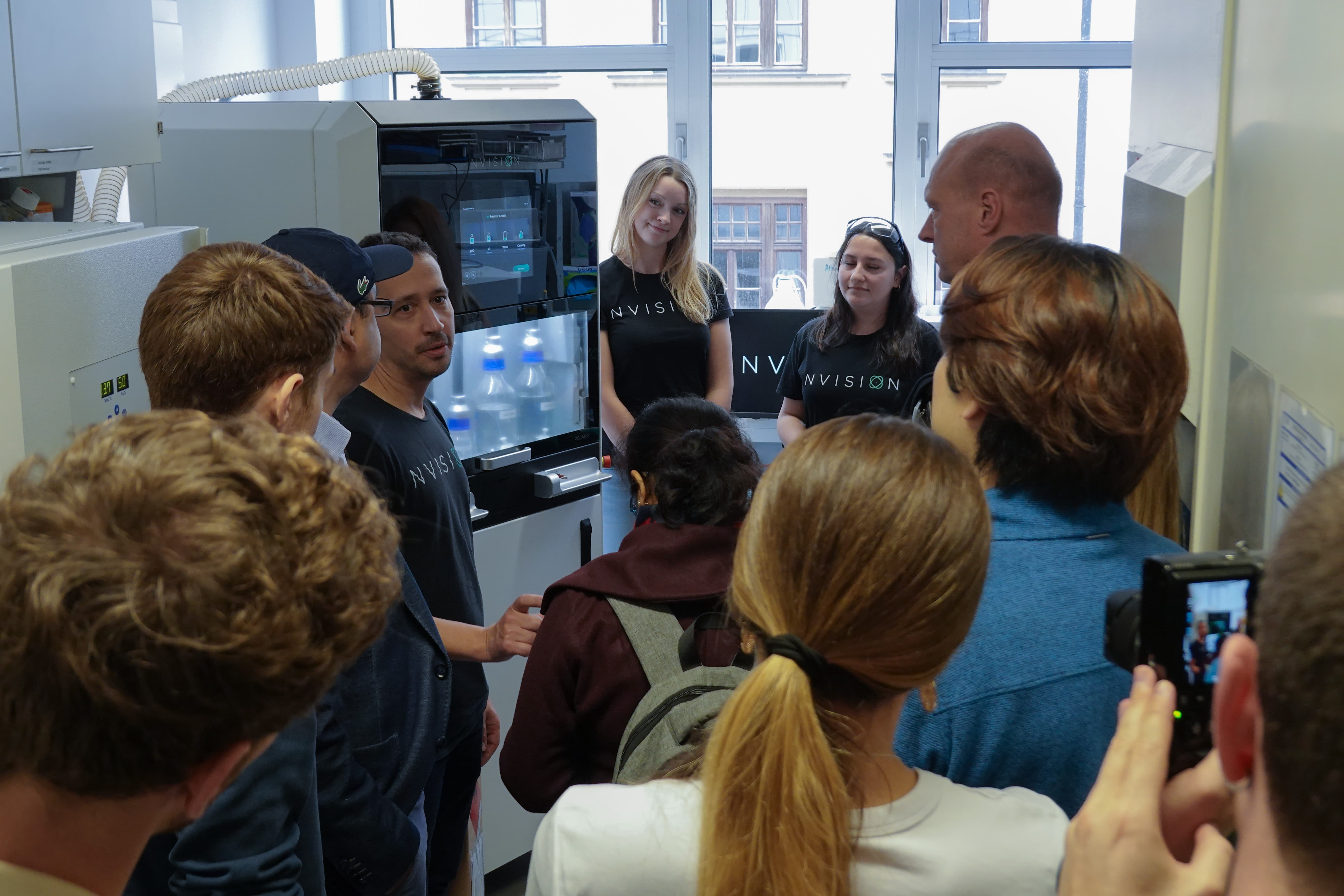
First Metabolic Data on Non-oncology Targets: Deployment at TUM Validates Broad Utility
MUNICH, Germany— The first installation of the POLARIS system at the Technical University of Munich's Schilling Lab is providing research data shortly after its launch.Researchers are using POLARIS to generate high-resolution metabolic data, with an initial focus on cardiac and renal metabolism.
Read more
POLARIS

January 30, 2025
NVision Successfully Launches POLARIS Preclinical: Enabling Breakthrough Metabolic MRI
ULM, Germany— NVision has launched the POLARIS Preclinical polarizer.This automated research tool employs proprietary quantum sensing technology to produce hyperpolarized MRI agents on-site, at scale.POLARIS Preclinical enables up to 100,000-fold signal enhancement of metabolic MRI by hyperpolarizing MRI imaging agents. Requiring no changes to the scanner, this capability effectively turns existing MRIs into powerful metabolic imagers.Because disease metabolism is fundamentally different from that of healthy tissue, this metabolic insight allows researchers to track therapeutic response in days, accelerating preclinical discovery and bridging the path to clinical implementation.
Read more
POLARIS
Company