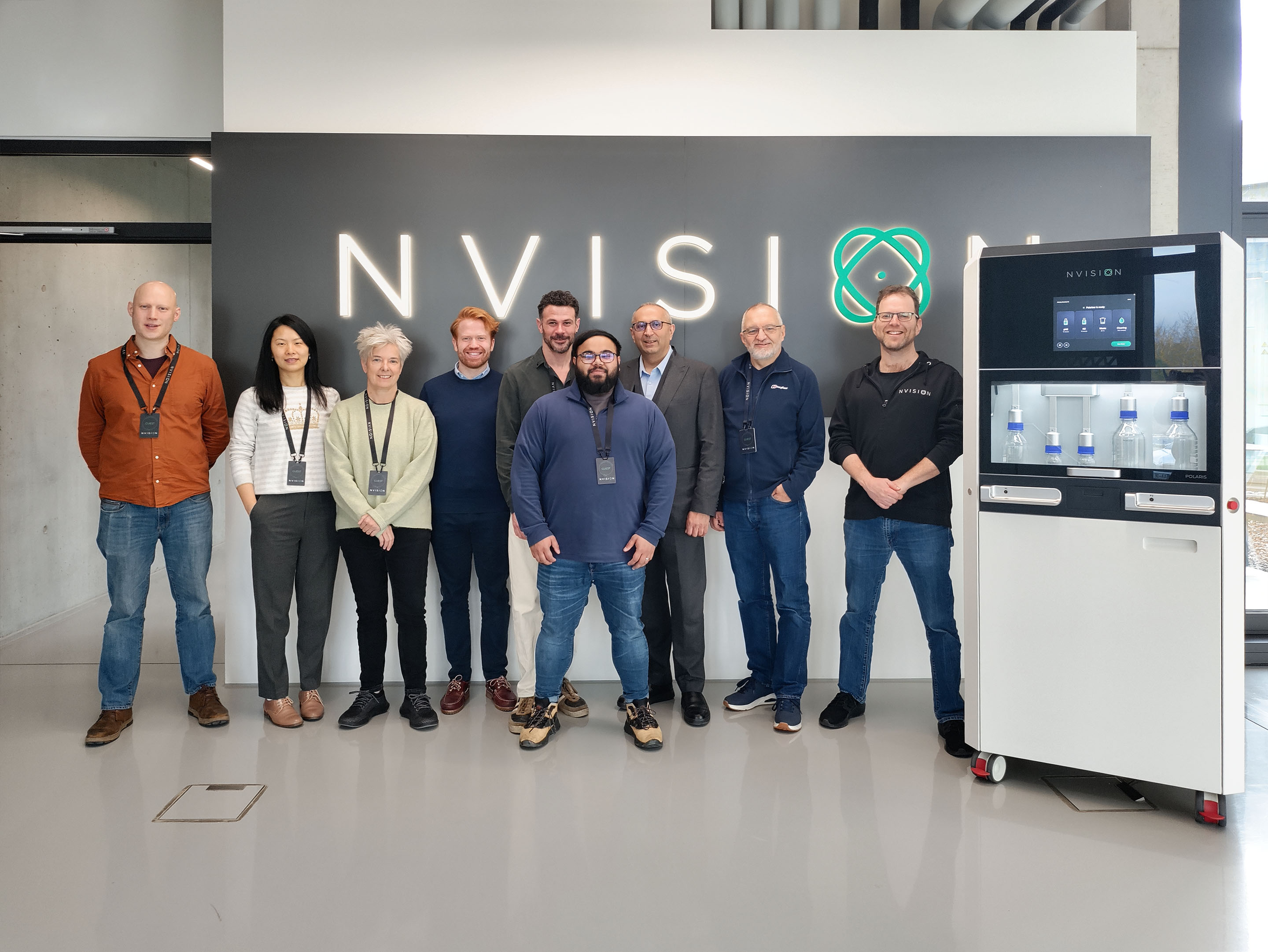
How do you make sure that a hyperpolarized MRI measurement made in London can be compared to one made in Munich? That is the question behind CHARM (Calibration of Hyperpolarized metAbolic MR), a consortium of University College London (UCL), Gold Standard Phantoms and NVision Quantum Technologies. Hyperpolarized MRI can show metabolism as it happens inside the body, but multicenter clinical studies depend on results that are comparable across scanners and research centers. The CHARM partners are building a calibration solution to make that possible. Working closely together, they have now begun collecting calibration data across international sites, laying the groundwork for future clinical studies around the world.
Why does hyperpolarized MRI need standardized calibration?
Hyperpolarized MRI using 13C-labelled imaging agents is a powerful tool for visualizing metabolism in vivo. It has demonstrated significant potential across research in oncology, neurology, and cardiology to support earlier diagnosis, improve risk stratification, or predict and monitor treatment responses.
As hyperpolarized metabolic MRI is adopted by more imaging centers, there is a growing need to ensure that measurements are comparable across sites. With differences in scanner hardware and imaging protocols possibly affecting data consistency, standardized calibration will be key in scaling the technology for wider clinical use.
Standardized imaging workflows depend on regular and reliable calibration. Making this practical across imaging centers requires a complete calibration workflow - from easy, rapid and cost-effective production of calibration doses to consistent acquisition and analysis of the resulting data. The CHARM project partners are bringing these elements together in an end-to-end, vendor-independent calibration solution:
- Calibration kit: Designed for generating cost-effective hyperpolarized calibration doses, complete with standardized concentrations of enzymes and precursor materials.
- Calibration phantom: A highly reproducible physical phantom, a reference object engineered to mimic biological conditions and used to test scanner performance.
- Analysis software & SOPs: Data processing tools and Standard Operating Procedures (SOPs) for processing raw scanner data to generate calibration data for application to dynamic metabolic images.
- Standardized acquisition: Standardized set of sequences that can be used across different MR systems.
How does POLARIS support scalable calibration?
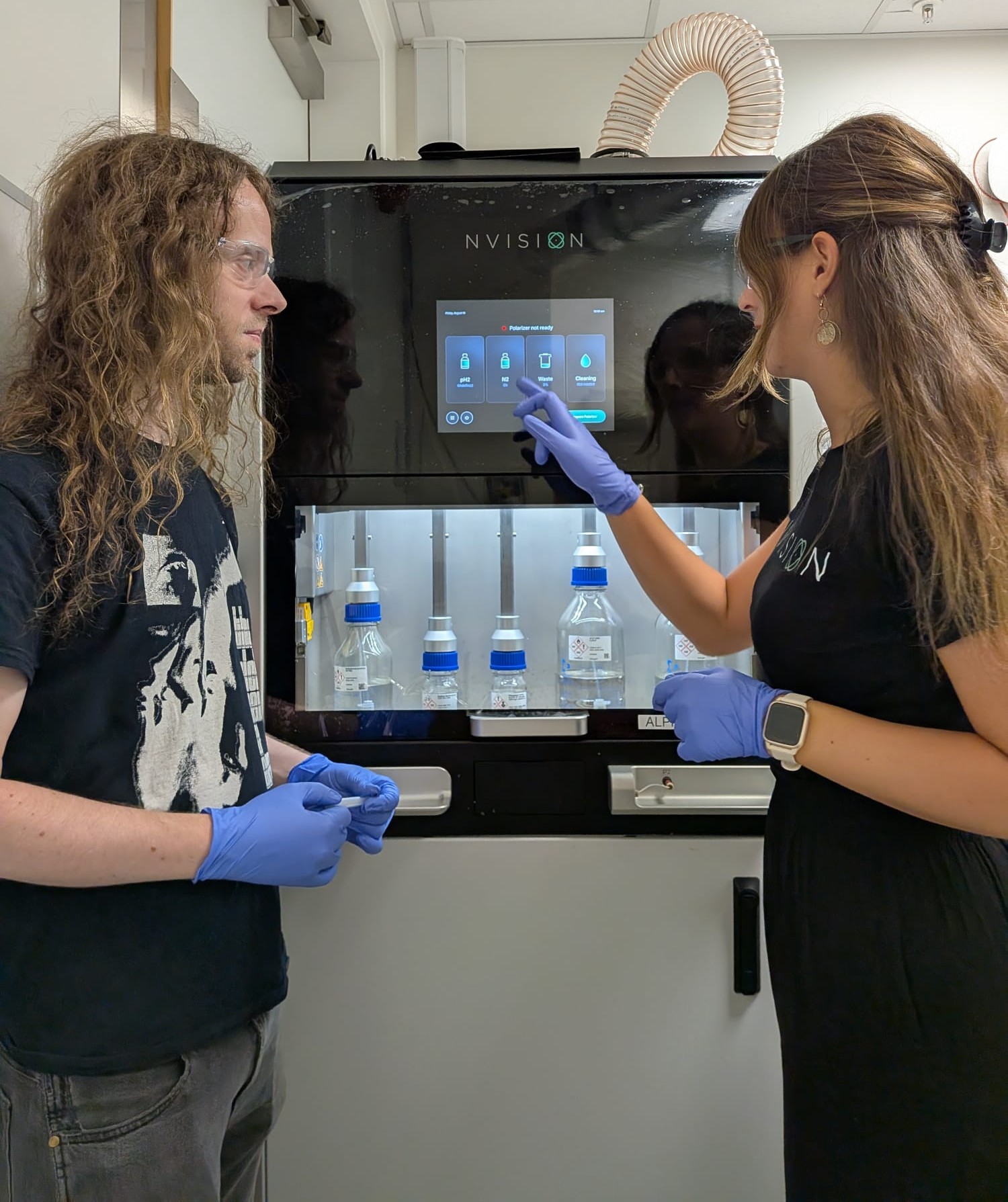
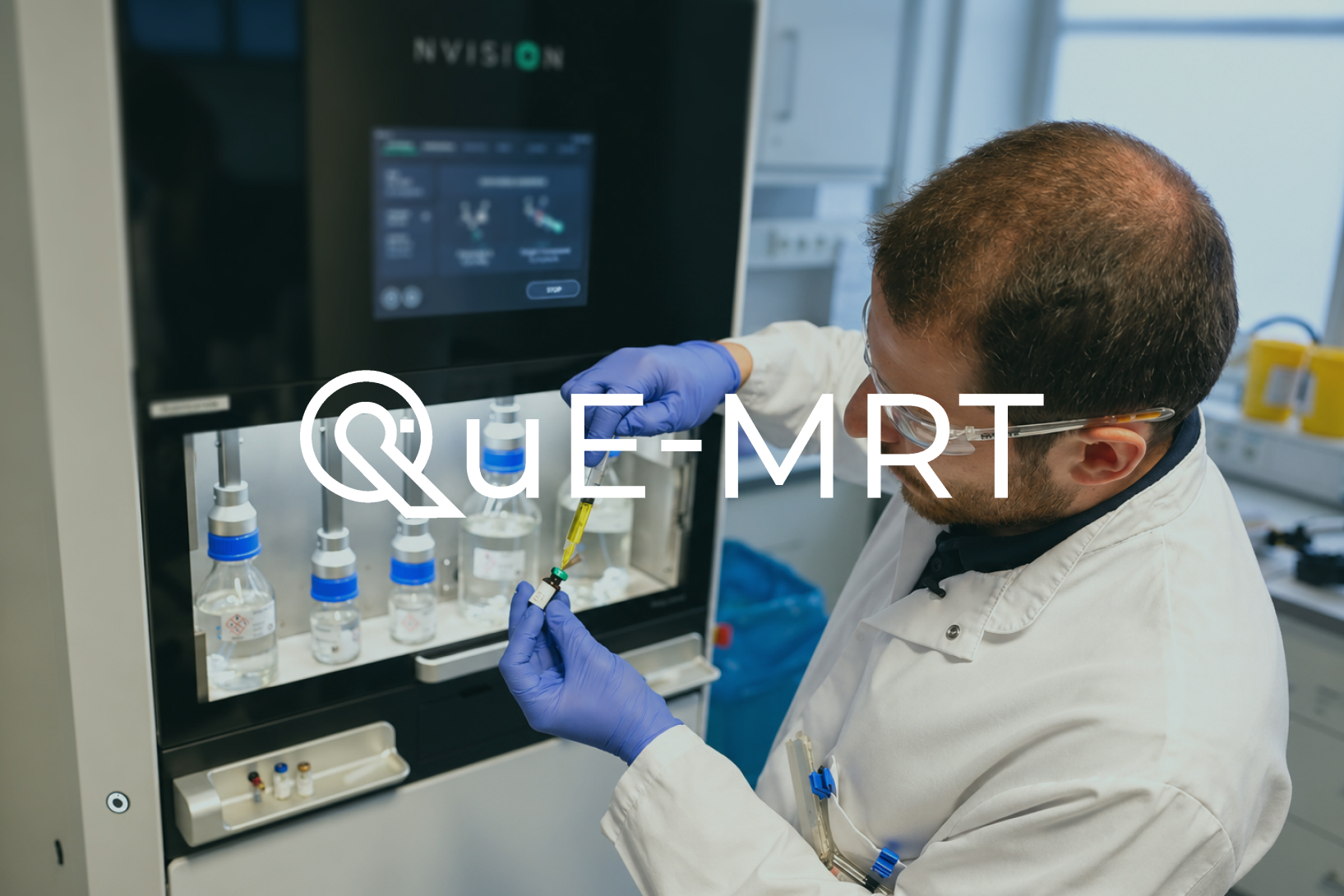
To meet the demands of these calibration workflows, the CHARM project utilizes POLARIS, NVision’s PHIP-based polarizer. By combining quantum physics with custom-engineered organic molecules, this technology transfers spin polarization from parahydrogen to a target molecule in just 2 to 3 minutes. This rapid turnaround is critical, as it makes frequent scanner calibration practical alongside routine data acquisition.
For a deeper dive into the principles behind quantum-enhanced MRI, visit our Technology Page.
What has CHARM achieved so far?
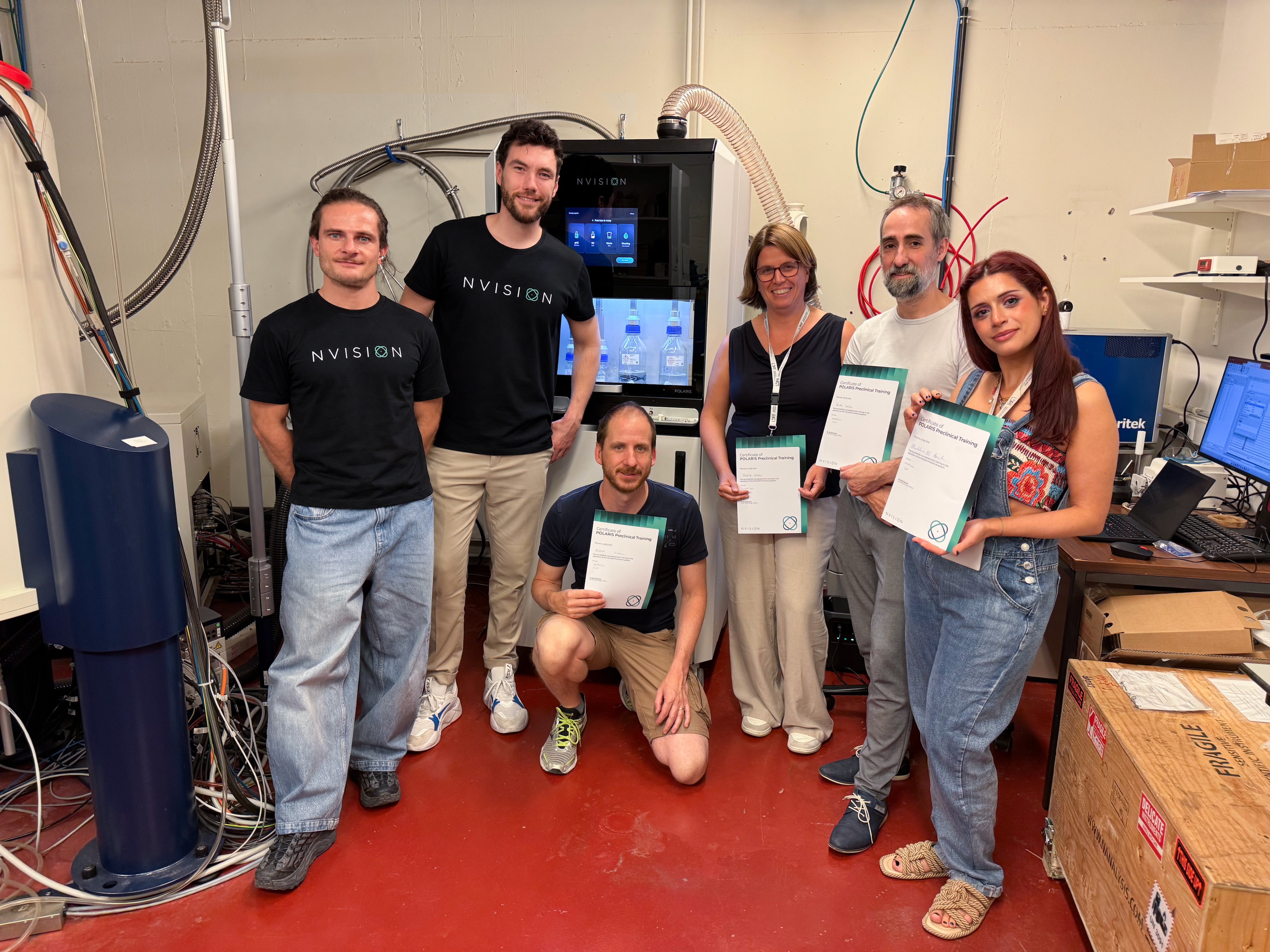
POLARIS was deployed at UCL to support the research of the CHARM project. At UCL, POLARIS generated more than 100 hyperpolarized doses in just three weeks, demonstrating its capacity for scalable workflows.
To date, the CHARM project has achieved several important milestones toward standardized, multi-site metabolic MRI:
- Building and testing the calibration tools: The consortium developed the calibration kit and phantom and tested them on a 3T Siemens scanner, where metabolic conversion was detected. Initial work was also carried out on a Philips 3T system.
- Creating a shared analysis workflow: UCL’s custom analysis pipeline has been integrated into NVision’s post-processing software, making it easier for participating institutions to use, develop, and share the same analysis workflow.
- Validating calibration across sites: The team has now collected data at two research institutions — UCL and Technical University of Munich — providing the foundation for future multicenter validation.
Together, these developments are building the infrastructure and methods needed to generate reproducible and comparable hyperpolarized metabolic MRI data across sites, supporting multicenter studies and the clinical adoption of metabolic MRI.